October 10, 2026



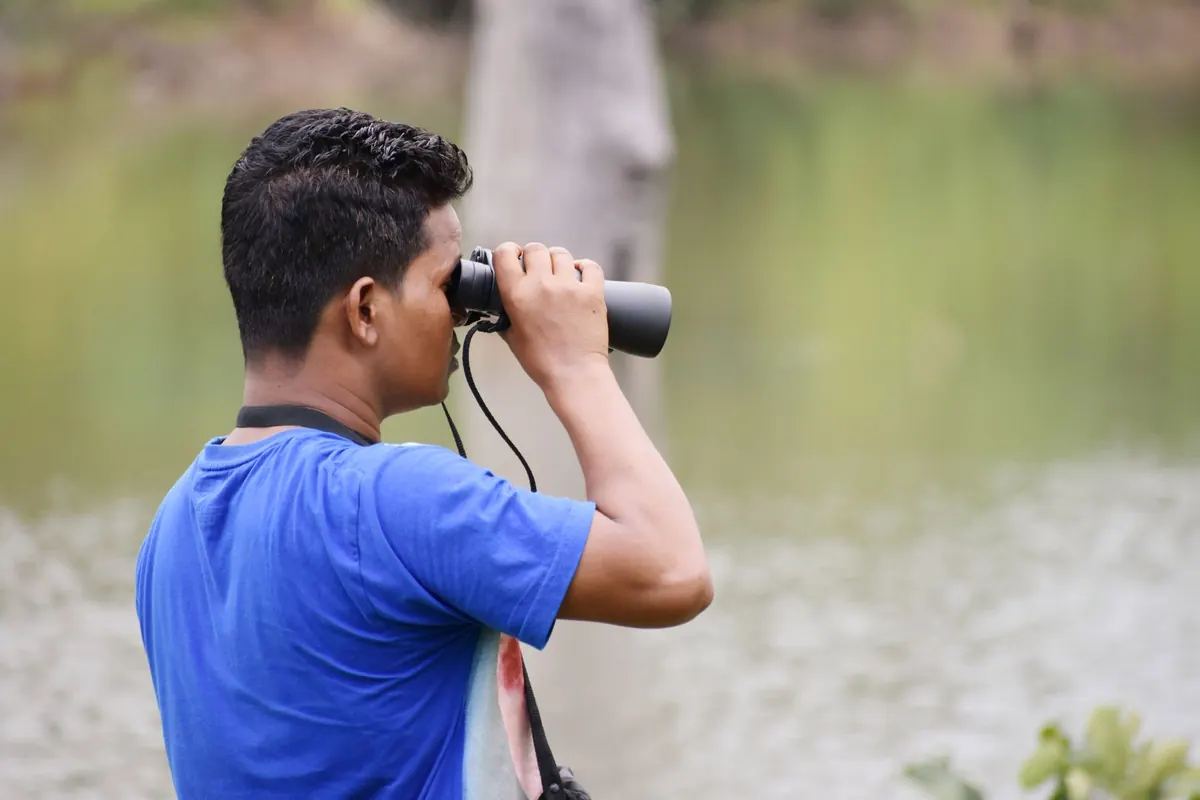
Most of what we know about the natural world was collected by someone standing outside, paying attention. A farmer noting when the swallows returned. A sailor logging the wind. That habit never died out — it just became easier to hand your notes to a researcher who needs them.
Citizen science, sometimes called community science, is ordinary people collecting, classifying, or transcribing data for real research projects. No degree required, no long-term commitment required, and often no equipment beyond a phone and a bit of curiosity.
Projects generally come in two shapes. In the first, you go outside and record something: birds in a park, rain in a gauge, stars visible above your street. In the second, you work with data somebody else already collected — classifying images of galaxies, transcribing weather logs from old ships, or marking features on satellite photographs.
What separates citizen science from a hobby is the protocol. A project tells you where to stand, what to count, how long to count for, and what to do when you are unsure. Follow those instructions and your single observation becomes comparable with thousands of others, which is what makes it useful. Skip them and you have had a pleasant afternoon outside — nice, but not data.
Bird projects are the friendliest entry point, because birds are everywhere and the tools are mature. eBird, run by the Cornell Lab of Ornithology, lets you submit a checklist from any walk. The Great Backyard Bird Count asks for fifteen minutes of counting over one February weekend. The Christmas Bird Count, organized through local Audubon groups, is a good choice if you would rather learn alongside experienced birders in person.
If weather interests you more, CoCoRaHS — the Community Collaborative Rain, Hail and Snow Network — asks volunteers to read a precipitation gauge each morning and report it online. It takes about two minutes, and the records are used by meteorologists, hydrologists and researchers studying drought and flooding.
Pick whichever matches something you already notice. If you know when the first robin usually appears on your street, you are halfway to being a phenology volunteer.
Globe at Night asks you to look at a constellation, compare what you see with star charts showing different levels of brightness, and report a number. That is the whole task — a measurement of light pollution from your own street, used by researchers studying how artificial light affects wildlife and human sleep.
FrogWatch USA trains volunteers to identify local frog and toad calls and to monitor a nearby wetland through the breeding season. If you live near a stream, regional programs often need help sampling water quality, counting aquatic insects, or noting erosion after heavy rain.
Zooniverse hosts dozens of projects where you classify images or transcribe documents — galaxies, wildlife camera traps, historical ship logs. It is genuine analysis and a good fit when you can only spare ten minutes. NASA's GLOBE Observer app collects cloud observations and mosquito habitat reports that feed into research and satellite calibration work.
Before signing up, ask a few blunt questions:
Start with one project. For most people with jobs, school runs and other commitments, two is the practical ceiling.
Citizen science is low-risk, but it is still fieldwork. Tell someone where you are going and when you expect to be back, especially for evening stargazing or wetland surveys. Do not wade into fast water, and check local guidance before handling wildlife or entering protected areas. If a project involves your health data — sleep, exercise, symptoms — remember that participation is voluntary and you can withdraw.
Also, be realistic about what your data can show. Volunteer observations are excellent for tracking timing, distribution and broad patterns. They rarely prove cause and effect on their own, and good projects are honest about that in their own write-ups.
Pick one project and give it a fair trial before judging it. A simple sequence works well:
The moment it clicks is usually the same for everyone: you notice something small and specific that you would have walked past a month ago, and you realise you were the only person who recorded it. That is the whole point. Somewhere, a dataset gets one more honest point on it, and you get a reason to pay closer attention to the world outside your door.
Photo: Manoj Poosam / Pexels
A ton of curious facts and stories.
Copyright © 2026 Curious Ton. All rights reserved. Curious Ton.