
October 10, 2026




Every autumn, something quietly remarkable happens in the canopy above your head. Trees that spent the summer as a wall of green begin to glow — amber, rust, crimson, gold — and then let go. It looks like a slow bloom in reverse. The leaves aren't actually changing into new colors so much as revealing colors that were hidden underneath them all along.
The whole process comes down to a handful of pigments, a few hormones, and the weather during a specific window of weeks. Once you know how the pieces fit, you can read a tree the way you read a forecast.
Chlorophyll is the pigment that makes leaves green, and it is the engine of the whole operation. It sits inside tiny structures called chloroplasts and captures sunlight, which the tree uses to turn water and carbon dioxide into sugar. Through spring and summer, chlorophyll is produced and broken down constantly, and because it is so abundant, it masks almost everything else in the leaf.
As days shorten and temperatures drop, deciduous trees begin shutting down for winter. A corky layer of cells forms at the base of each leaf stalk, gradually cutting off the flow of water and nutrients. Chlorophyll production stops, and what remains degrades fairly quickly in sunlight. The green drains away.
What's left behind is the leaf's supporting cast.
The yellows and oranges — the gold of a birch, the amber of a hickory, the bright pumpkin of a sugar maple mid-transition — come from carotenoids. These pigments are present in the leaf all season long, working alongside chlorophyll to help capture light energy and protect the leaf from the damaging effects of too much sun.
Because they are more stable than chlorophyll, they simply outlast it. When the green fades, they become visible. This is the same family of pigments that colors a carrot orange and a daffodil yellow, and there is nothing the tree needs to manufacture in autumn to produce them.
Reds and purples are a different story, and that's what makes them interesting. Anthocyanins are not sitting in the leaf all summer. Many trees — red maples, oaks, dogwoods, sourwoods — actively synthesize them in autumn, which takes energy at the exact moment the tree is trying to reclaim resources and close up shop.
Why spend energy on a pigment that is about to fall to the ground? There are a few well-supported explanations, and they likely work together:
In practice, the reds you see in a given tree depend on a mix of genetics and weather. Some individual maples simply run redder than their neighbors, year after year.
A colorful autumn is not guaranteed. It's a rough recipe with a few ingredients, and the weather in September and October decides how well the batch turns out.
The classic combination is sunny days followed by clear, cool nights that stay above freezing. Warm, bright days let the leaf keep making sugars. Cool nights slow the movement of those sugars out of the leaf and also slow the breakdown of anthocyanins, so more pigment accumulates. Dry, sunny weather during this stretch tends to produce the deepest reds.
A few conditions reliably dull the display:
One thing that surprises people: a warm, wet spring and a mild summer don't hurt, but they don't guarantee a great fall either. The decisive window is much closer to the event itself.
Different species run on different clocks. Black gums and sumacs often turn early, sometimes while the rest of the woods is still green. Maples tend to peak in the middle of the season, oaks later, and some oaks hold onto brown leaves well into winter.
Where a tree grows matters too. Elevated ridges and north-facing slopes cool faster, so color tends to arrive there first. Trees at the edge of a field, exposed to more sun and wind, often color before the same species tucked inside a sheltered valley. If you want a longer season, you can chase that gradient: start high in late September and work your way downslope over the following weeks.
You don't need a laboratory to enjoy this. A few habits will make the autumn much more legible.
The fall color season is short, usually only a couple of weeks at full strength in any one place, and it can end overnight with a hard freeze or a windstorm. So treat the good days as a deadline rather than an option. Step outside on a bright, cool morning, pick a tree near you, and look closely at what's actually happening — the green draining, the yellows emerging, the reds building. It is one of the few dramatic natural processes that happens on a schedule you can plan around, and it rewards attention more than any photograph does.
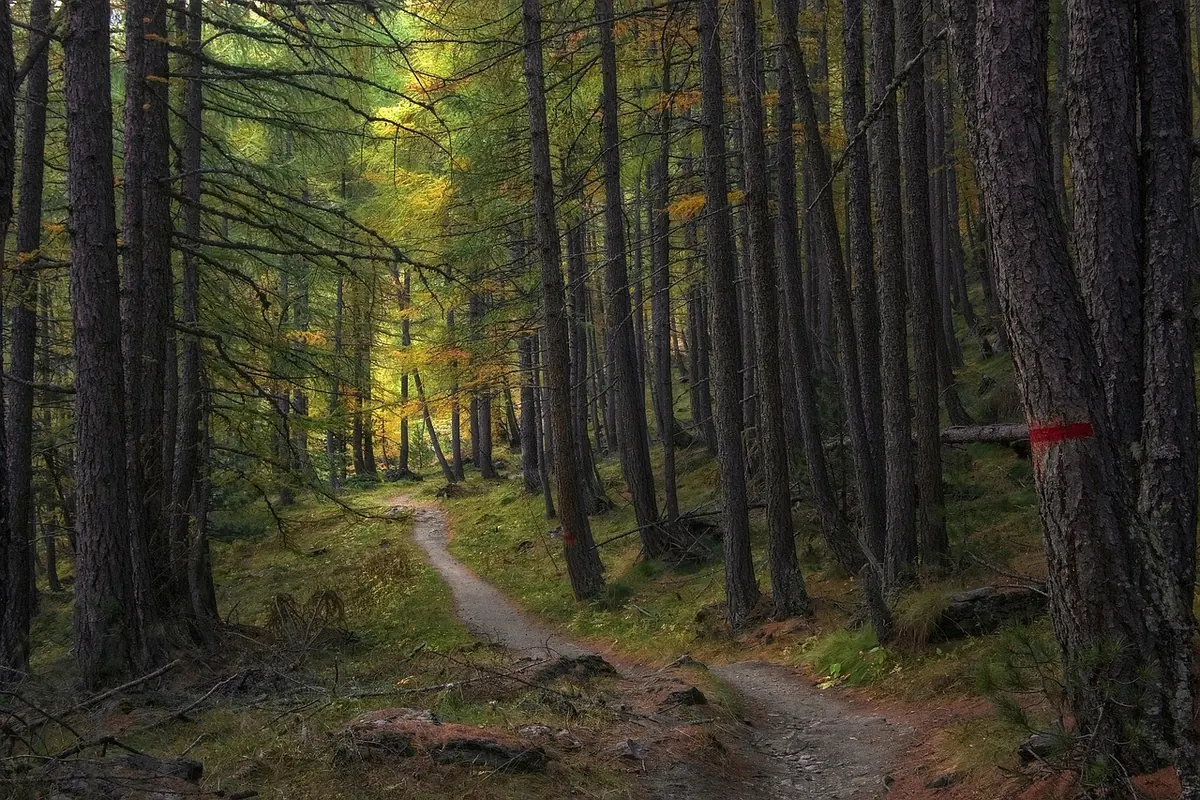
Photo: Camera-man / Pixabay
A ton of curious facts and stories.
Copyright © 2026 Curious Ton. All rights reserved. Curious Ton.