October 10, 2026




On the afternoon of December 5, 1945, five U.S. Navy torpedo bombers took off from Fort Lauderdale on a routine training flight. Their leader, an experienced pilot, reported a failing compass and then worsening confusion about where the planes were. Radio contact faded. A search aircraft sent after them also disappeared. Twenty-seven men were gone, and nothing definitive has ever been found. That single afternoon did more than any other event to create the legend of the Bermuda Triangle — and it is also one of the best examples of how the legend grew by leaving parts of the story out.
That question is harder to answer than it sounds. The standard version runs from Miami to Bermuda to San Juan, Puerto Rico, and back. But the boundaries move depending on who is drawing them. Some writers have stretched the western edge into the Gulf of Mexico; others have pushed it east across most of the Atlantic. Vincent Gaddis coined the phrase in a 1964 magazine article, and Charles Berlitz popularised it in a 1974 bestseller that added a long list of incidents.
That drifting border matters. When your region is defined by the outcome — "things disappear here" — you can always redraw it to include whatever story you need. The name appears on no official map. The U.S. Board on Geographic Names does not recognise it as a geographic feature, and there is no agency that tracks incidents under that heading.
A handful of cases do the heavy lifting in every retelling:
Notice how much of that list involves aging equipment, weather, and human decisions. Now notice what the legend usually removes: the weather reports, the maintenance logs, and the fact that the search aircraft probably caught fire.
In the mid-1970s, an Arizona librarian named Lawrence Kusche went back to the original newspaper and Coast Guard records for the incidents in Berlitz's book. His findings were unglamorous. Some disappearances had happened thousands of miles outside any version of the triangle. Some vessels were later found, or were abandoned wrecks, or simply never sank at all. Several reports gave dates and departure ports that did not match the shipping records. A few incidents had been repeated across multiple books with details that drifted each time.
That is the ordinary machinery of folklore: each retelling sharpens the mystery and softens the facts.
The region is genuinely difficult water. It holds the Gulf Stream, a current fast and strong enough to scatter debris quickly. It holds sudden squalls, shallow banks and reefs, and the Sargasso Sea, an area of calm and floating seaweed that early sailors found unsettling. Compasses do behave oddly in places, because the line of zero magnetic variation passes through the Atlantic near there and shifts over time. None of that is supernatural.
Then comes the arithmetic. The Florida Straits, the Bahamas and the Caribbean are among the most heavily travelled waters and skies on Earth — thousands of vessels and flights a day even decades ago. A region with that much traffic will accumulate a lot of incidents in absolute terms. What matters is the rate, and nobody has produced a reliable rate for the triangle, because the boundaries are unstable and the reporting is selective.
One serious scientific hypothesis deserves a mention: that a release of methane from seabed hydrates could reduce water density and sink a ship. It is a legitimate area of study about ancient climate and seafloor stability. It has never been shown to have caused any specific loss in the region.
Because a solved mystery is less fun than an open one. Floating seaweed in a calm sea, a flight leader's confused radio call, a ship that never signalled distress — these are evocative fragments, and humans are excellent at linking fragments into patterns. The triangle also offers something rare in a mapped world: a patch of ocean that still feels unaccounted for.
There is no harm in enjoying that. There is harm in repeating a story as fact when the paperwork says otherwise.
Next time you read that a ship "vanished without a trace," try these questions:
Answers to those questions rarely produce a single tidy verdict. They do usually produce something better: a picture of what probably happened, and an honest sense of what remains unknown. The triangle is not a place where the laws of physics stop applying. It is a place where a good story has been told often enough to crowd out the evidence.
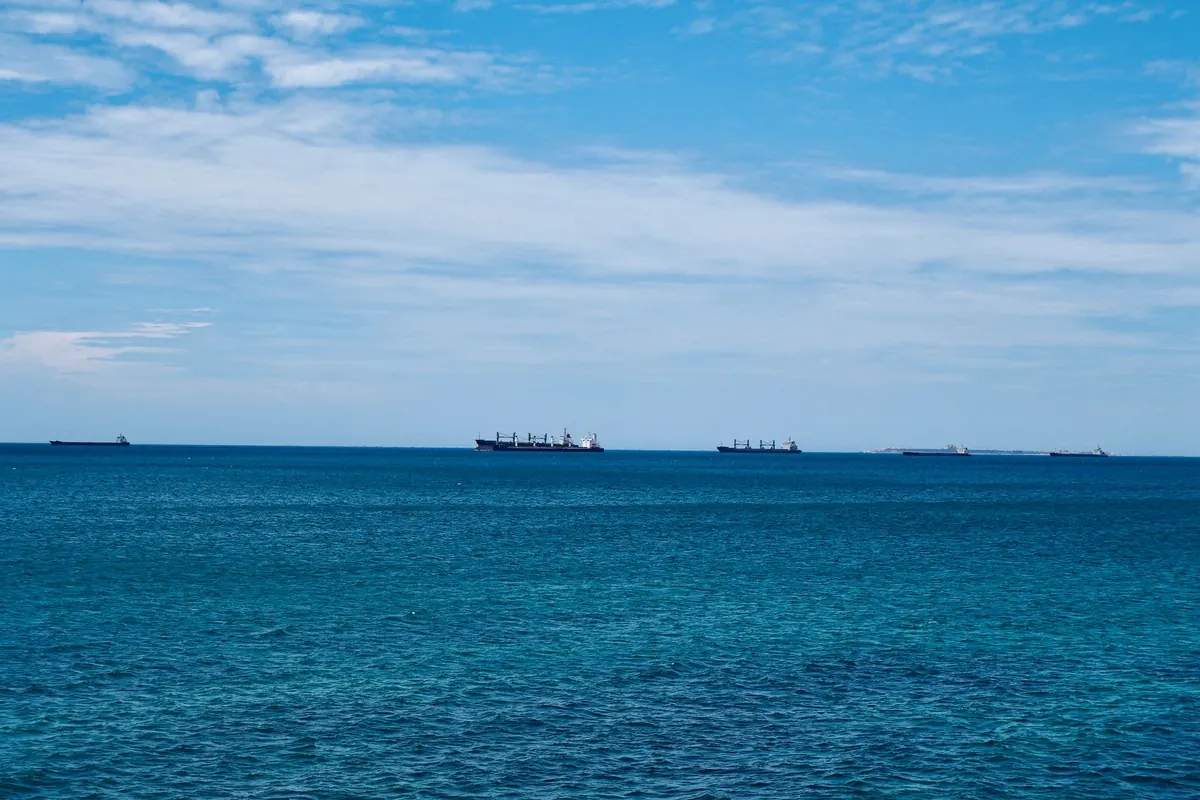
Photo: Haneul Trac / Pexels
A ton of curious facts and stories.
Copyright © 2026 Curious Ton. All rights reserved. Curious Ton.